
On-Page SEO Checklist (2026): Optimize Titles, Content & Rankings
If you’re looking to improve website ranking with On-Page SEO, you’ve landed on the right article. In this article, I’ll cover everything that works in 2025 and will work in 2026 for On-Page SEO.
All the techniques I’ll share will be hands-on and give you practical ideas for improving on-page SEO. Getting a hang of On-Page SEO can boost your rankings like never before, and that’s exactly what we’re about to learn in this article.
So without wasting any further time, let’s dive right into the article.
What is On-Page SEO?
Before I share practical tips to improve your on-page rankings, let me clarify what On-Page SEO is and why it still holds utmost importance for ranking on Google in 2025.
On-Page SEO, aka On-Site SEO, is optimising articles for search engines like Google, LLMs like ChatGPT, and users.
On-Page SEO includes writing keyword-focused content, optimising title and heading tags, internal linking, clean URLs, and other ranking factors that will be covered later in this article.
The goal of On-Page SEO is to increase the visibility of an individual webpage on search engines like Google. Couple this with off-page SEO, and you have the perfect recipe for higher Google rankings.
Does On-Page SEO work?
According to this Google report, the most basic ranking signal is having keywords in your title and heading tags.
Even with all the advancements in AI and technology, Google has become much smarter, but the fundamentals of ranking remain the same.
For competitive search results, if you search for it on Google, to this day, you’ll see websites using direct keywords in their titles.
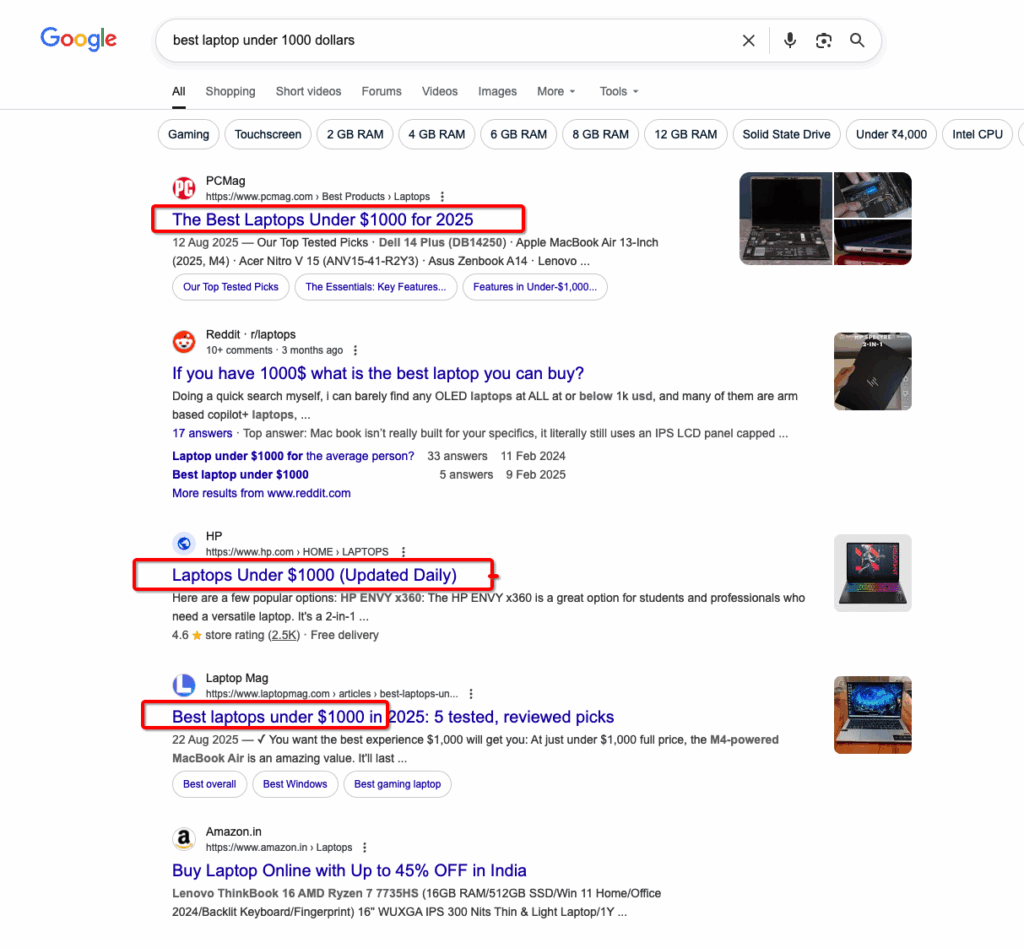
To answer the question, yes, On-Page SEO still works the same way in 2025. Although we have to adapt to new ranking policies, most of this stuff still works.
Why is On-Page SEO Still Important in 2025?
Before we learn how to do On-Page SEO, let’s quickly understand the importance of on-site SEO.
On-page SEO boosts individual pages on your website, helping casual visitors become your loyal customers.
The biggest myth about On-page SEO is that you can optimise keywords on the page and you’re good to go. However, it’s a lot more than that.
Apart from keyword optimisation, you also need to optimise your content for:
– Bounce rate
– CTR
– User experience
– Page load speed
– Desktop & Mobile devices
– Search Intent
To summarise, On-page SEO optimises content for both users and search engines, so it’s a win-win for everyone.
On-Page SEO: Things That Work
It’s time to learn the best techniques for On-page SEO. Let’s dive straight into it.
1. Optimising Title Tags
Title tags carry significant weight in how Google ranks articles. Optimising titles is a key element for cracking rankings in 2025.
Title tags give Google an overview of what the article is all about. Although Google will rewrite the titles if they’re too long, it’s recommended that you use titles anywhere between 50 and 60 characters long.
Always try to put the targeted keyword first in your title. This isn’t always necessary, but in my experience, it works best both for Google rankings and for users looking for a specific search result.
Look at how, when I search for “laptops under 1000 dollars”, I get search results with the entire keyword in their title tags.
For better CTRs, use modifiers in titles. Things like “best, review, guide, checklist” will help you get that click, which is crucial for ranking.
Using modifiers with your main keyword in the title tag will also rank you for other long-tail keywords.
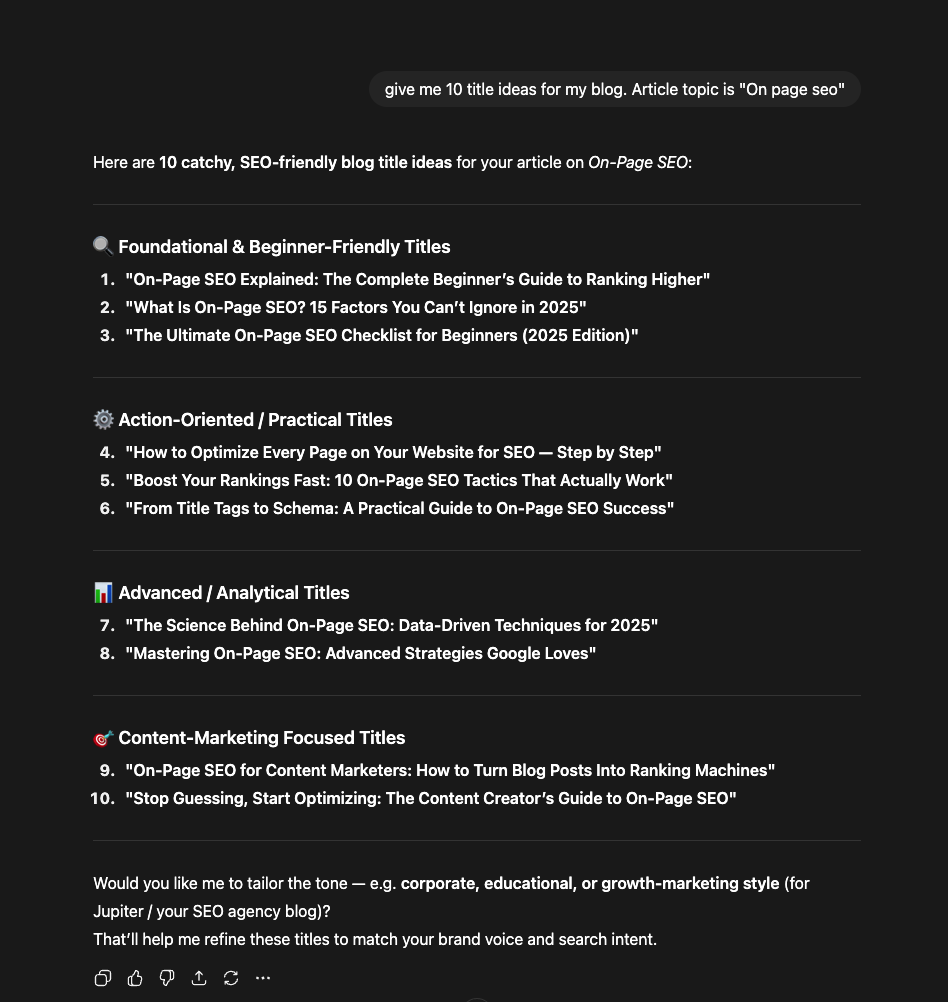
For creative title ideas, make use of AI tools like ChatGPT. Here’s an example below:
2. Optimising Meta Tags
Meta descriptions aren’t a direct ranking factor, but they still help improve your CTR.
How?
Well, if you use a good meta description with keywords the end user is searching for, Google often bolds those keywords, helping your descriptions stand out from the competition.
Here’s a template that I recommend you follow to write great meta descriptions
“Here’s a [content overview]. Learn how to [specific benefits] from this [content description]”
Example:
Here’s a complete guide on blog writing tips. Learn how to write killer content that converts in 2025.
3. Write SEO Optimised Content
Let’s understand how to write SEO optimised content that search engines like Google and LLMs like ChatGPT want to rank.
Ranking in 2025 with On-page SEO isn’t just stuffing keywords and hoping you’ll rank #1 on Google. Instead, we now have to optimise articles for search intent, make them unique and valuable and finally write for both users and search engines/LLMs.
Writing unique content isn’t about not copying from the competition anymore. It’s about doing something out of the box. Something that search engines have never witnessed.
You can do things like:
– Publishing a fresh case study
– Discuss a brand new tip or strategy
– Bring in original research
– Downloadable resources
All the above strategies will make you stand out from the competition, eventually yielding a higher ranking, or even the top 1 spot, on Google and LLMs.
4. Giving Value to Users
Writing unique content will definitely help, but that’s not the only factor that will keep you in the rankings. Understand this: millions of blog posts come out every single day.
To hold that number one spot, the key factor is to provide insane value to your readers. Your content piece should stand out, and users should love it.
Here’s how you can make your webpage that no one can re-create:
#1. Get into details:
People love reading articles that are backed by in-depth research. Don’t hesitate to use tons of images, infographics and screenshots to explain your point.
#2. Use up-to-date material
If your article is no longer relevant, update it. Always keep your articles up to date with the latest strategies.
#3. Use Copywriting
To get the end user to read your article to the very end, use persuasive copywriting. Give them a reason to continue reading, and don’t make it boring. Give examples, case studies and strategies that they can implement today.
5. Fulfil Search Intent
Writing unique content and providing value to the end user is surely a good way to get you on the first page of search results; however, to stay there for long enough, you need to understand the intent of the search query.
If someone is searching for “best 14inch laptops under 1000 dollars”, and if you publish an article on “best laptops under 1000 dollars”, you’re not fulfilling the search intent of the end user. In such a case, even if you have the best article on the internet, the chances of you making it to the first page are slim.
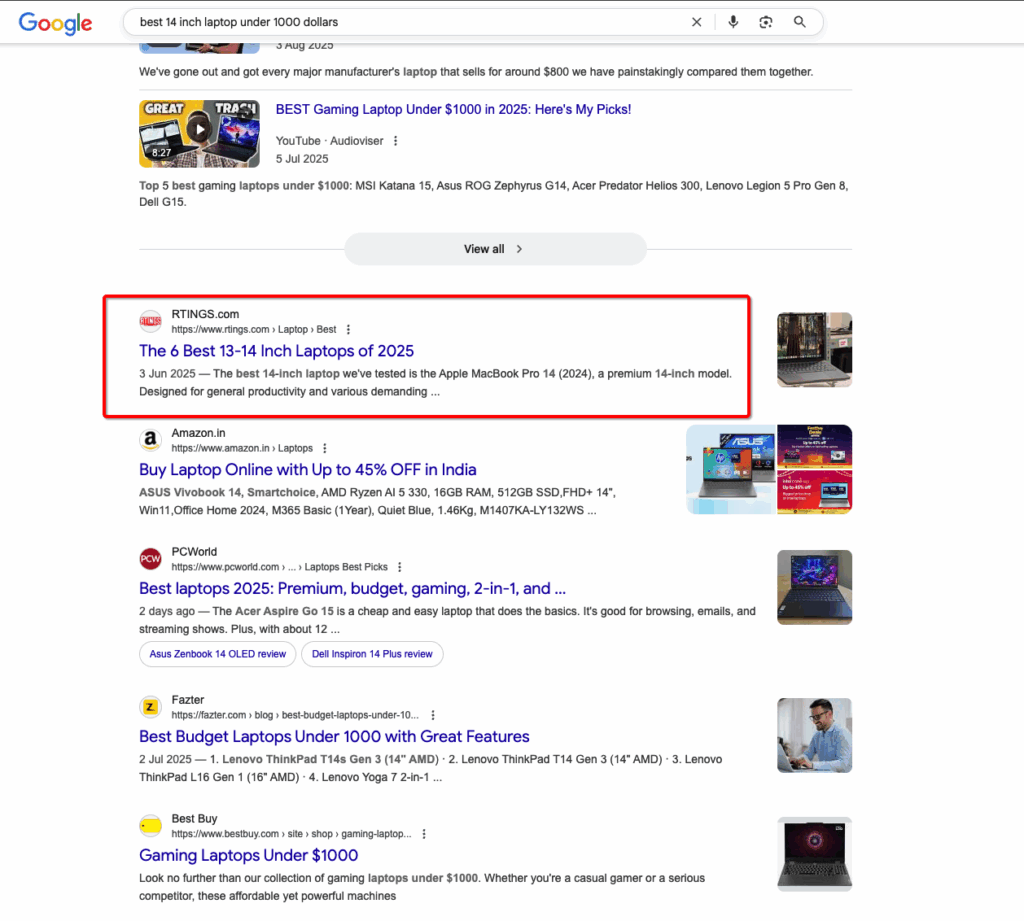
Google will always reward rankings that prioritise users first and search engines second.
Pro Tip: To get the best rankings, always focus on users’ search intent. Just by doing so, you have a pretty high chance of getting those first-page rankings.
6. Use Target Keywords Early
Remember the old days when every SEO guy used to say to use the exact match keyword in the first line of the article. Well, the same works to date. Although Google will never admit it, I know it works like magic.
If you’re targeting “best laptops under 1000 dollars”, don’t hesitate to use the exact keyword in the first 100 words of your article. The clear answer is that Google gives more weight to the actual keywords that appear early in the article.
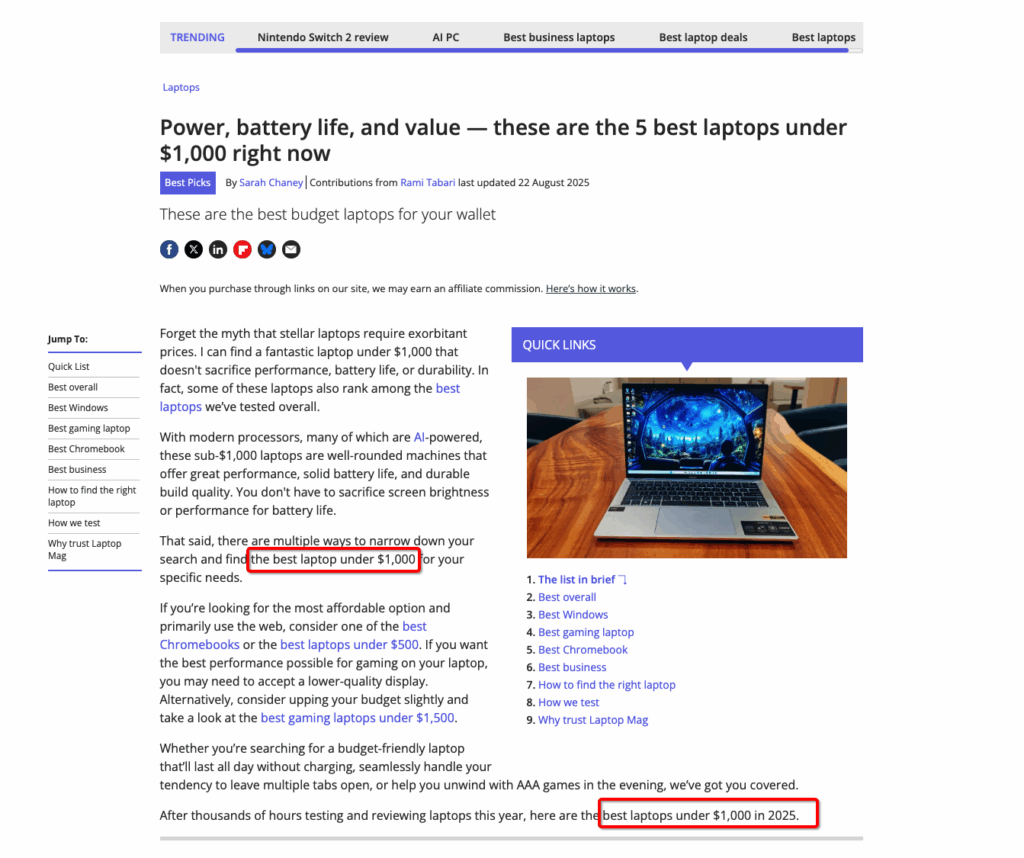
Also, use some variation keywords so it doesn’t look outright spammy.
7. Keyword Frequency
Just like the name suggests, keyword frequency is how many times you’ve used your keyword in the article.
Google might not encourage you to use exact-match keywords multiple times, but as a blog and SEO expert, this still works in 2025.
Imagine this, you’re writing an article on “how to buy the best laptop under 1000 dollars”, here your main keyword is “best laptop under 1000 dollars”. Now you’ve used this keyword only once in the article – do you think Google will understand that the article is about buying the best laptop under 1000 dollars? The answer is no, it won’t.
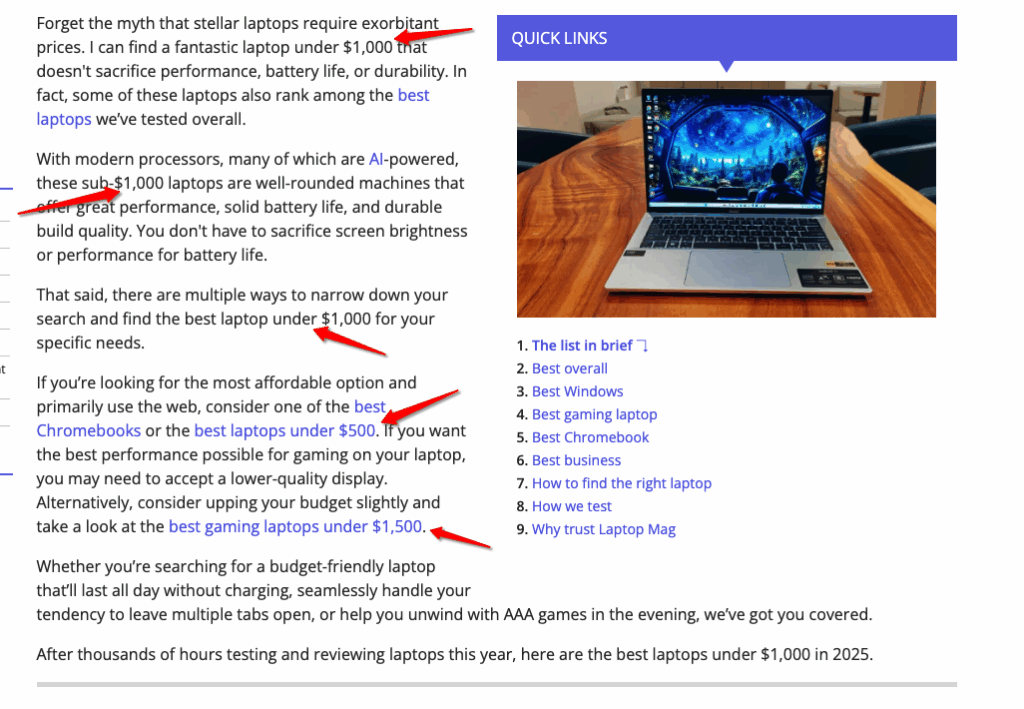
Instead, suppose you have used the exact keyword and other variations multiple times in the article. In that case, Google will clearly see the intent of your article and will start ranking for keywords that are used more often, in our case, “best laptop under 1000 dollars”.
Pro Tip: Keep the use of keywords naturally balanced so that it doesn’t look like keyword stuffing straight off the bat.
Use keywords in the H1 tags, URLs, title tags, first paragraph, and image alt text.
8. Use Keywords in Headings
One of the most underrated ways to do On-page SEO in 2025 that works is using keywords in your H1 tag.
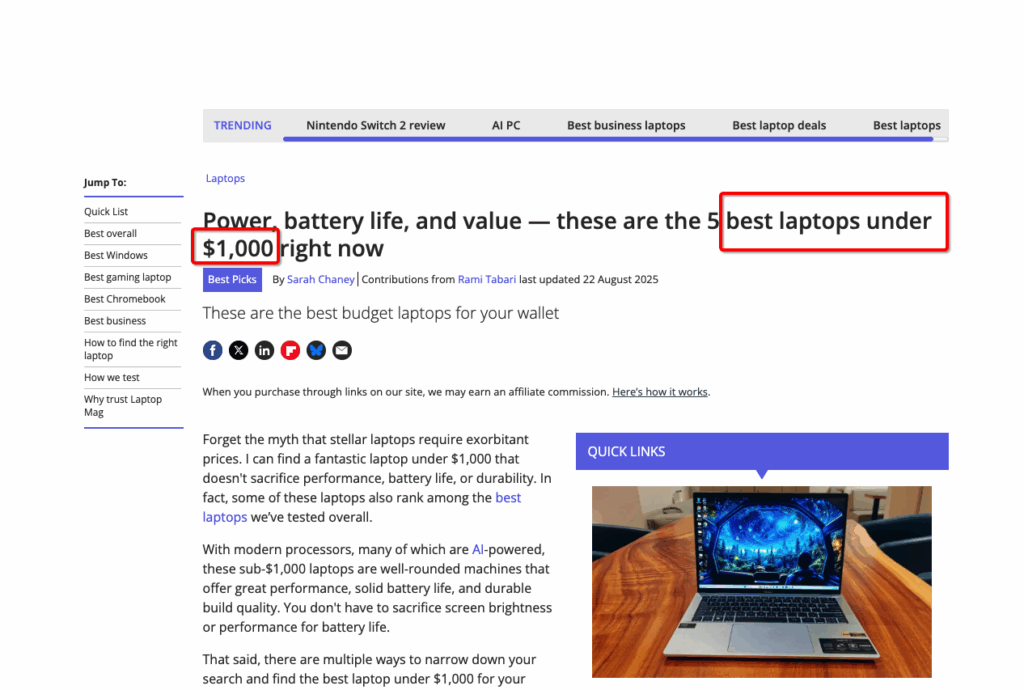
Use a site audit tool like Semrush to check whether the main keyword is missing from the H1 tag. Using keywords in H1-H6 heading tags gives you higher topical authority and helps users read the content more easily.
I’d suggest using the target keyword primarily in the H1 and H2 tags to benefit from it directly.
9. Structure Content For LLMs
ChatGPT is the new Google. Many users now use ChatGPT to find solutions to their problems. As a blogger who is looking to get traffic from everywhere, your focus in 2025 should be to structure your content in a way that gets ranked on LLMs like ChatGPT, Gemini, and Preplexity.
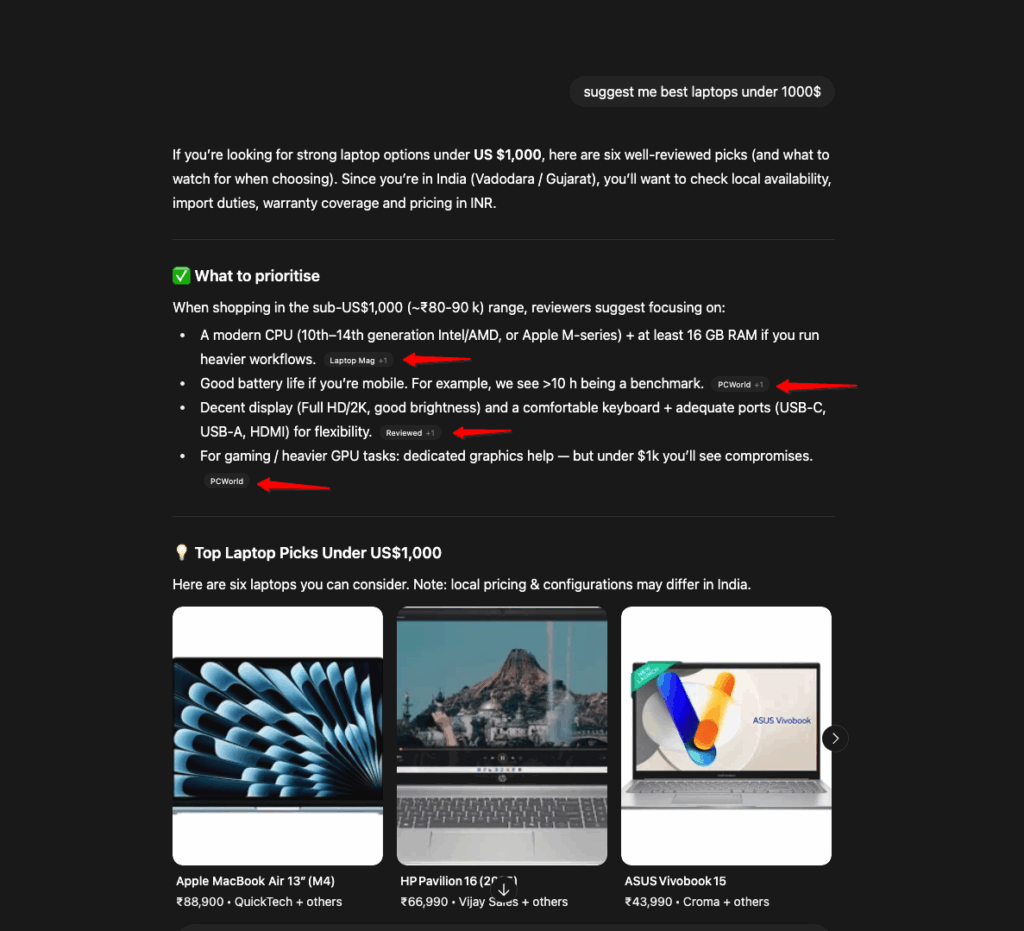
Steps to increase LLMs’ visibility:
#1. Keep it structured
Key a clean structure to your article. Use plenty of headlines, paragraphs, and images. Each section should feel like a mini article filled with all the information.
#2. Descriptive Subheadings
Don’t use filled subheadings just to make your articles look bigger. Instead, focus on writing content that actually solves the end users’ problem.
#3. Use FAQs
Use the FAQs section on the website that LLMs can scroll through, and cite it for users. Be sure to cover all the Q&A the user needs regarding a particular topic.
10. Use Internal Linking
Internal Linking remains one of the key factors for ranking in On-Page SEO.
A smart strategy for internal linking is to give links from highly authoritative webpages to newer pages that Google has not yet ranked. While internal linking, make sure you always use your exact keyword that you want to rank on Google. However, don’t just spam it everywhere on the website; keep it natural.
Use tools like Semrush or Ahrefs to understand which pages have the highest to lowest authority. Doing this will help you know what webpages need a boost.
11. Optimize URLs
Stuffing keywords in URLs isn’t considered a direct ranking factor in Google. However, using keywords in the URLs will help users read the article more easily, and Google will also get a better sense of what the article is about.
Here’s how you should optimize URLs for On-page SEO:
#1. Use keywords (that you’re targeting) in all URLs
#2. Keep the URLs short
For example, if you’re targeting the keyword “best laptops under 1000 dollars”, keep your URL as xyz.com/best-laptops-1000-dollars/
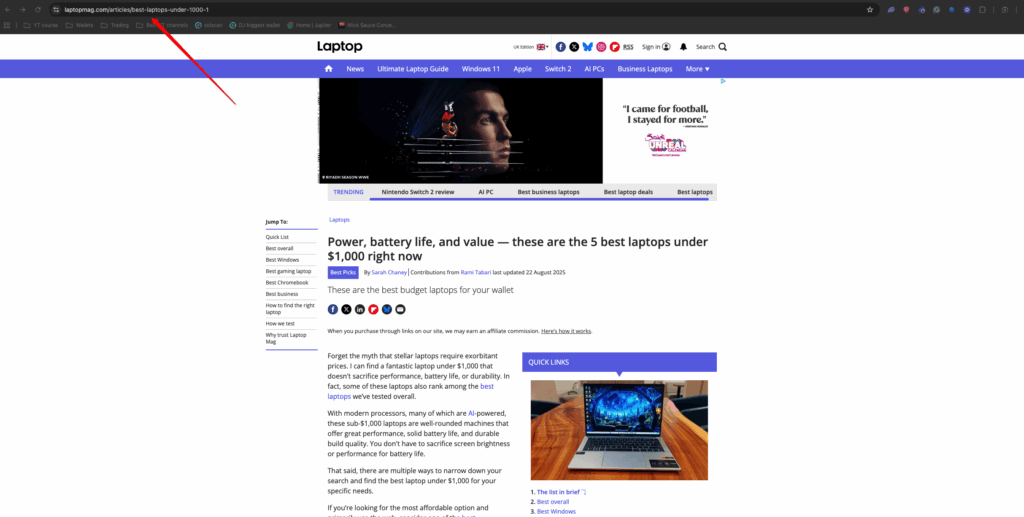
You don’t always have to use the exact match keyword in the URLs. Google is still smart enough to understand the article’s context.
12. Optimise Images
Search engines like Google cannot directly read images; therefore, we need to optimize images to improve on-page SEO.
Optimising images with alternative text can help you get higher search rankings in Google Image Search, hence driving more organic traffic to the website. Adding alt text also provides more context to ChatGPT, which helps you get mentioned in their search results.
Typically, the best way to write alt text is to use a long-tail keyword in the image. You can also use the exact-match keyword, but if you have multiple photos, using variations in the form of numerous long-tail keywords helps.
Above all, optimise images for size too. Don’t keep the photos so big that they affect your page load time. Use an online tool that reduces image size.
13. Optimise Content for Featured Snippets
Featured snippets help you get high CTR. Honestly, featured snippets aren’t a clear ranking factor; however, they help you get high CTR that translates into higher rankings.
Your goal as a blogger is to optimise for keywords that have the potential to rank in featured snippets.
One quick way to do this is to use Semrush’s Organic Research tool.
First of all, search your competitor’s website in the organic search tool, Semrush, which will give you a list of all the webpages that are ranking on page one. Next, click on the featured snippets keywords section in Semrush to know the keywords that rank in featured snippets.
Now, start adding those keywords in your article and see the magic happen. Slowly but surely, Google will push your webpage into featured snippets.
14. Use Schema Markup
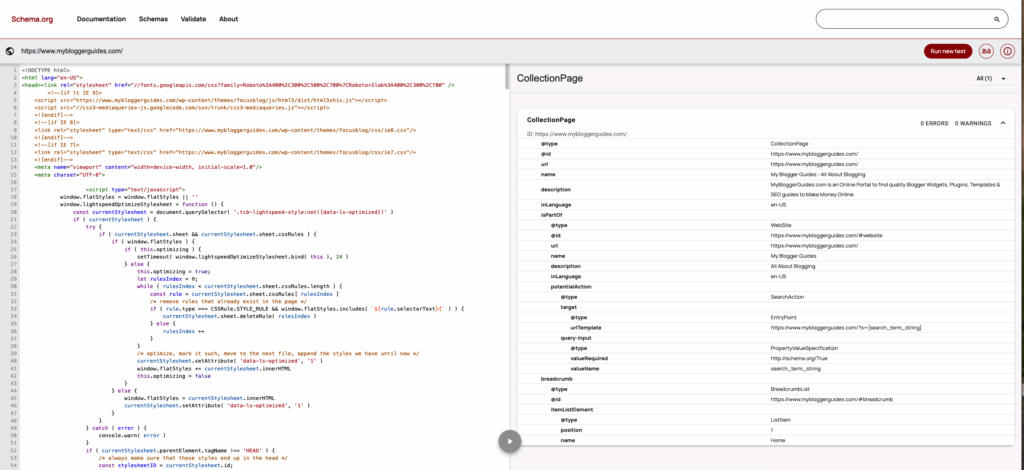
A schema is a type of structured data that search engines use to read your website. Schema doesn’t improve rankings, but it does help with rich snippets on Google.
Rich snippets provide users with more information, which can eventually lead to more clicks.
And more clicks equal a higher Google ranking in SERPs.
Rich snippets include images, reviews, and ratings. They provide user more information about your page directly on Google without clicking.
Types of Schema Markups
FAQ Schema: For users searching for answers to their questions, the FAQs schema helps you get more space in search results, hence giving you a higher chance to earn that click.
Organization Schema: Use this to get your business details in Google’s knowledge panels and local search results
How-to Schema: Used for how-to-based tutorial articles and for showing step-by-step instructions directly into the rich snippet
Review Schema: Used to display customer reviews directly in the rich snippet.
Product Schema: Used for showing product information in the rich snippet.
Use Schema Markup Validator, a free tool to check if you have your schema set up correctly.
15. Add Current Year To Titles
Emotional titles and titles with the current year get more clicks compared to titles that don’t have any of these.
Again, these are not direct ranking factors, but they help improve CTR, which gets you more clicks and higher rankings. Everything is interconnected with one another.
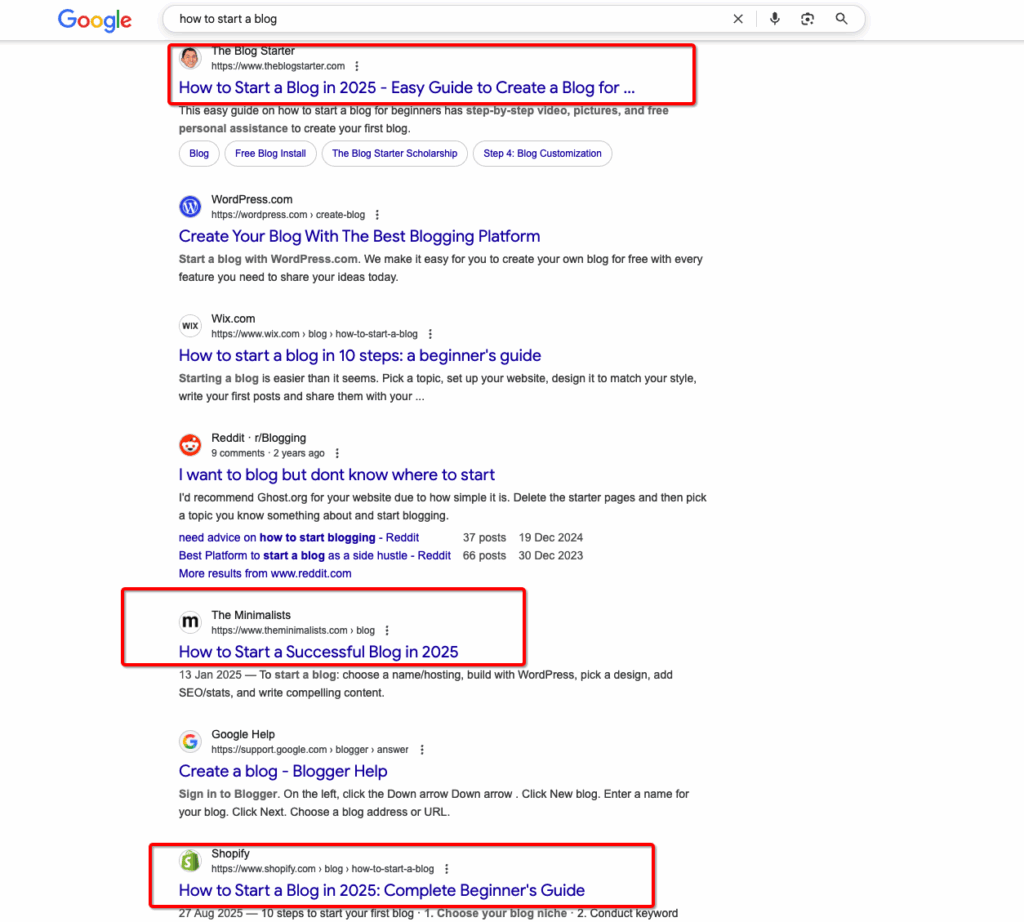
Here’s an example that includes some emotions and adds the current year.
“A Complete Guide to On-Page SEO That Will Blow Your Rankings in 2025”
Another example is for the keyword – “How to start a blog”
Here are the search results for the same:
Pro Tip: Don’t make the mistake of adding the current year in URL slugs. Articles need fresh content every year, and if you add the year, you’ll get stuck. Keep your URLs clean and simple.
In our case, for this article, the url is https://www.mybloggerguides.com/on-page-seo/
Ongoing Efforts To Keep Your Rankings
On-Page SEO isn’t something you do once and forget about it forever. As Google’s algorithm changes every year, we also need to keep up to date with new SEO techniques. It’s a continuous effort to stay at the top of your game.
As a blogger, you always have to monitor certain parameters:
Keyword rankings: Constantly monitor your keyword rankings. If the keyword rankings take a dive, your job is to revisit those webpages and optimize the content to regain those rankings.
Click-through rate (CTR): Keep an eye on the title tags and descriptions. Monitor the CTR on these title tags. If they are bad, rewrite your titles and descriptions to improve CTR. Remember, a higher CTR is directly correlated with higher Google rankings.
Bounce Rate: A higher rate typically indicates users don’t find the content they are reading interesting. Your job is to reduce the bounce rate and keep visitors on the website to maintain rankings.
Traffic: If you notice a sudden drop in your traffic for ranked pages, it’s time to revisit them and update the content with the latest strategies.
FAQs
How often do I perform On-Page SEO?
Monitor On-page SEO every month. Doing it every month is a good start. Focus on a detailed On-page SEO revamp every quarter.
How important is On-Page SEO for a website?
On-page SEO is one of the most important factors for ranking on Google. You need a mixture of both on-page and off-page SEO to rank on Google. Avoiding On-page SEO can make your journey in ranking pretty hard.
Suggest the best tools to perform On-Page SEO?
The only two tools I use and recommend for on-page SEO are Semrush and Ahrefs.
What comes under On-Page SEO?
Optimising title tags, CTR, image alt text, keywords, internal linking, and URLs falls under proper On-page SEO.
Final Words:
That’s a wrap on how to use On-page SEO to rank on Google in 2025. I’ve tried to cover everything that I know about on-page SEO.
If I have missed anything crucial that you think needs to be added to the list, pls don’t hesitate to comment below and let me know.
Also, if you are still reading this and liked the content, do share three key learnings that you had after reading the article.
For suggestions, drop them in the comments, and I’ll see you in the next one.
Contents
